Buying a Road King: what to check on an older Road King
When buying a Road King of an older model year, three things matter most: which engine it has (Evolution or Twin Cam), the condition of the engine and drivetrain, and whether the paperwork is clean. A well-maintained Road King will still run trouble-free for tens of thousands of miles. The Road King is one of the most popular models I sell: over the last ten years I have bought around 150 of them.
💬 Ask on WhatsAppSee my checklist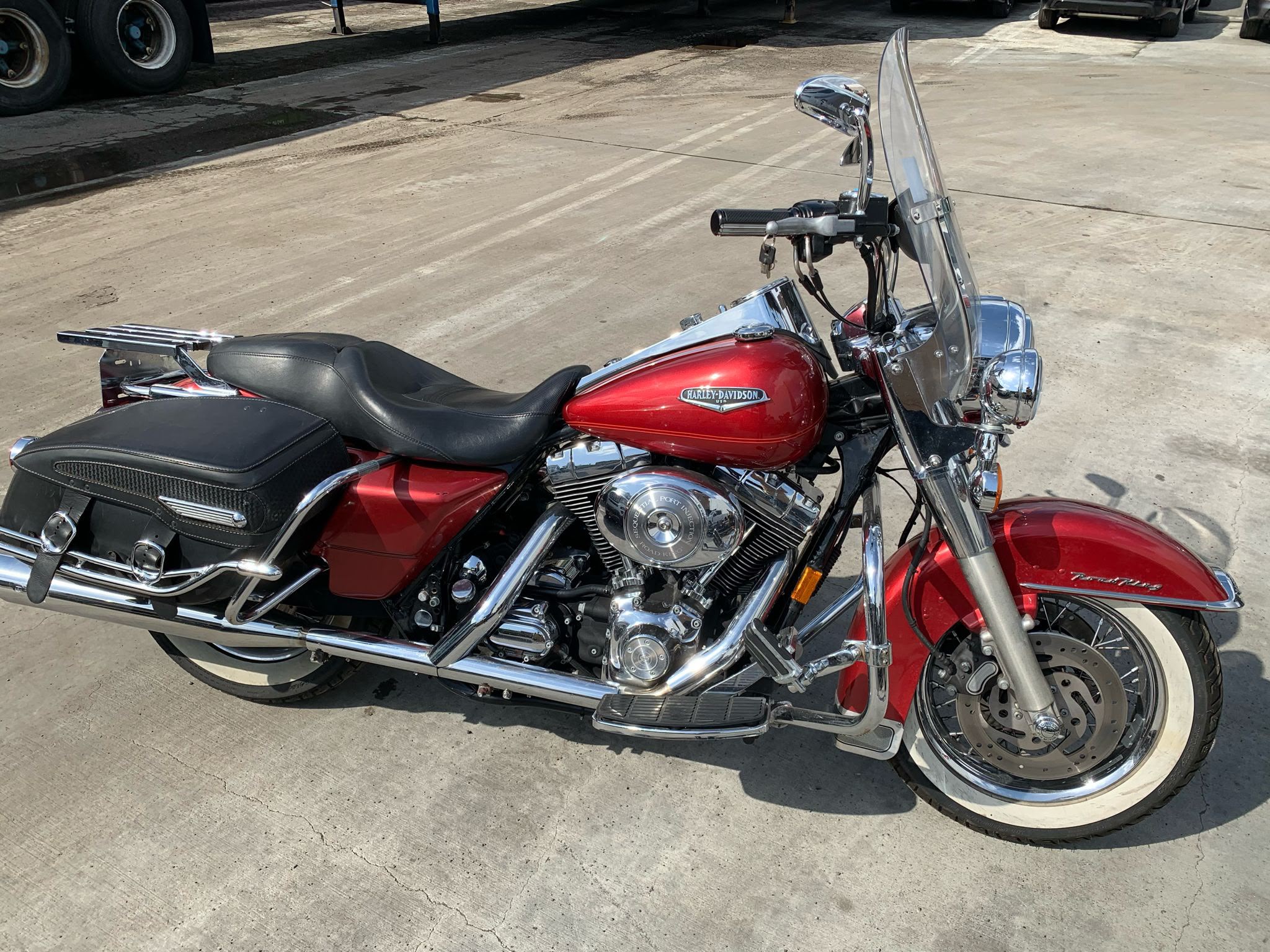
Evo or Twin Cam: which Road King are you buying?
The Road King (FLHR) arrived in 1994 with the 1340cc Evolution engine. From model year 1999 it got the Twin Cam 88. Both are good engines, but you check them differently.
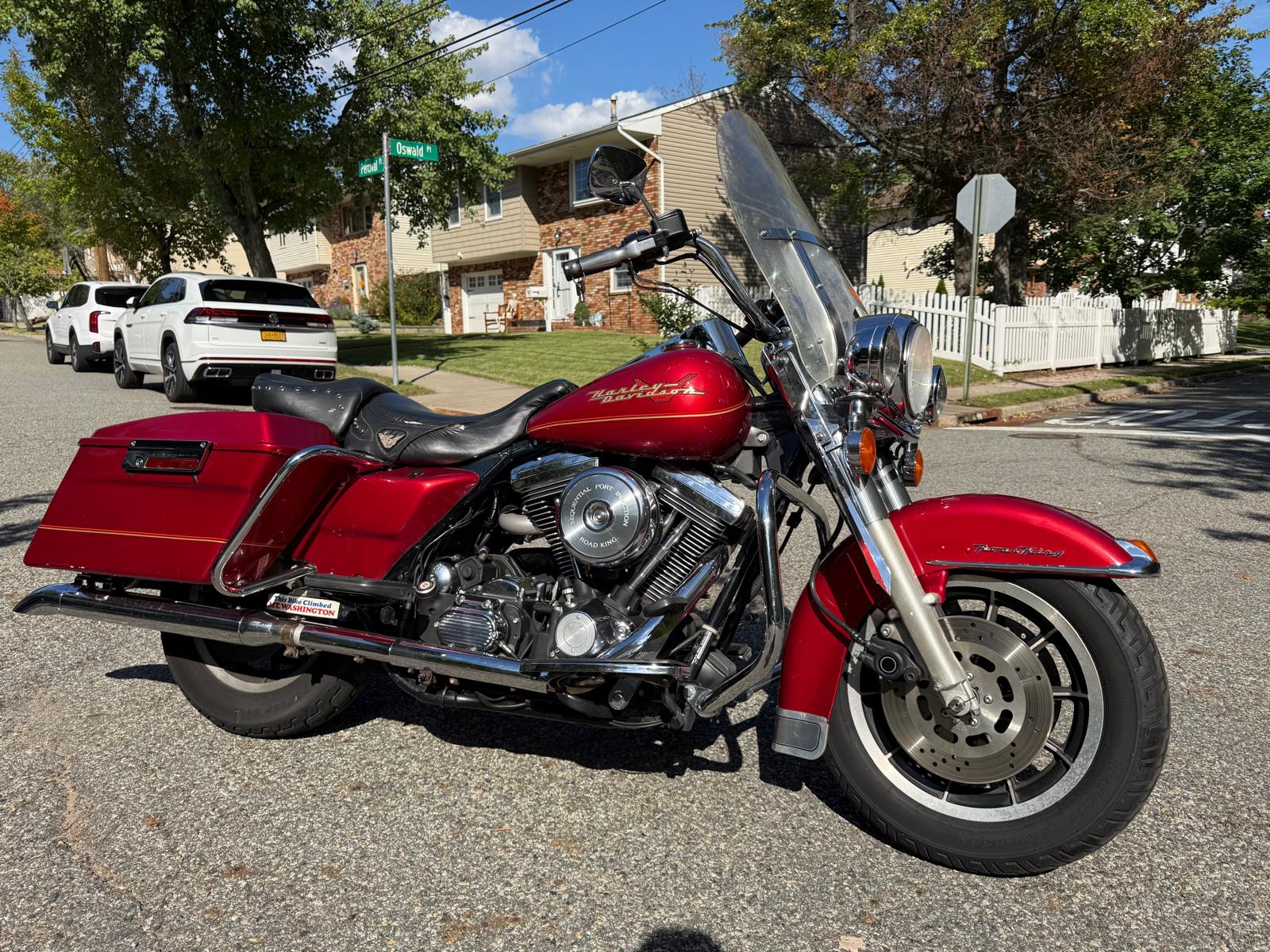
- Evolution (1994-1998): an Evo simply has to be clean, otherwise I don't buy it. The 1994 and 1995 models always have a carburettor. They are either lovely or too far gone to buy. They are beautiful classics that are rising in value; the black and silver 1994 is especially popular. The later Evos are also very nice and are gaining value too. My advice: buy a nice, clean one, and always walk away from a scruffy one or a doubtful case.
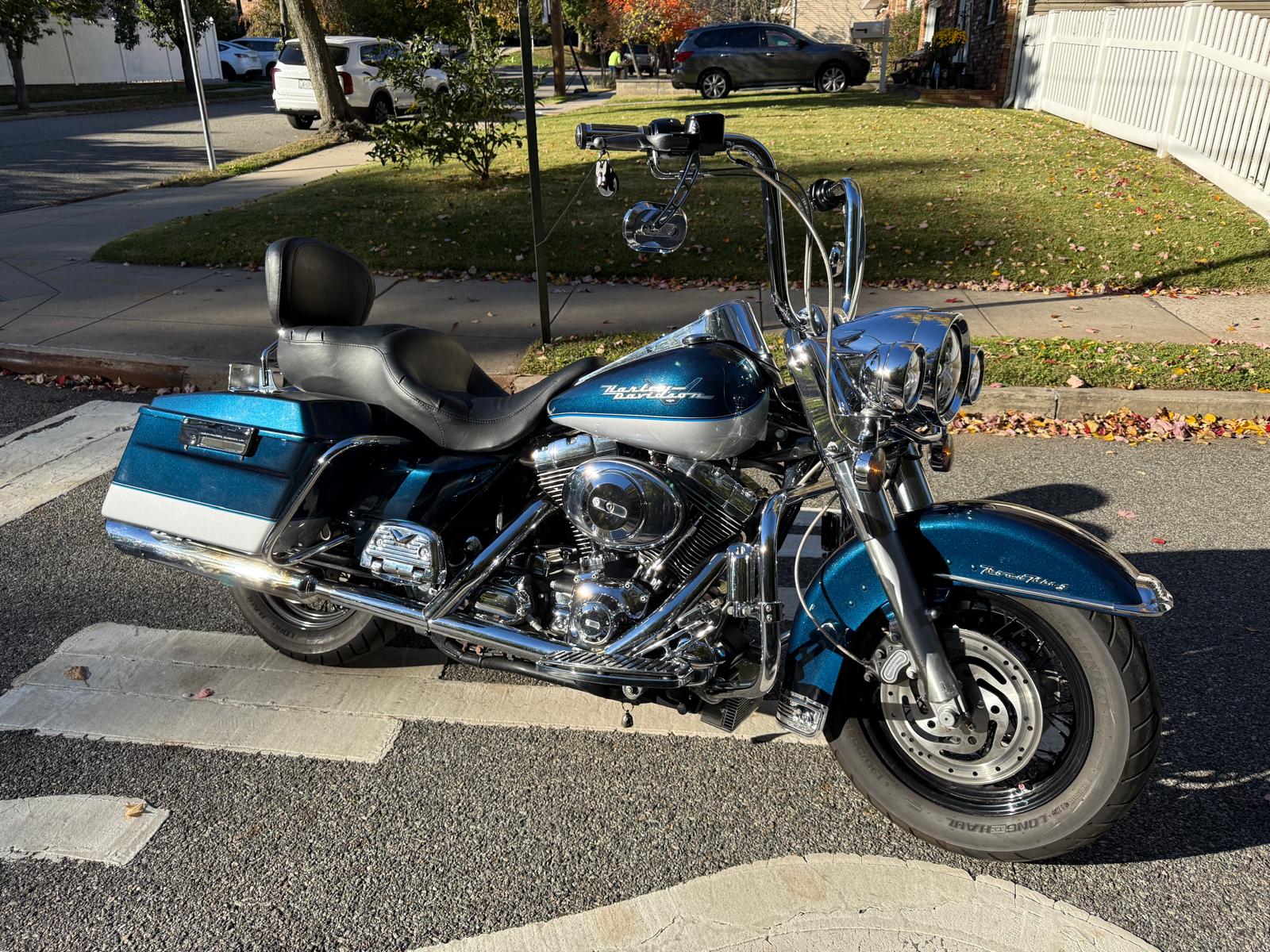
- Twin Cam 88 (1999-2006): watch the cam chain tensioners. Always ask whether they have been replaced or upgraded. On higher-mileage bikes this has usually been done already. Under 20,000 miles (about 32,000 km) you don't need to worry, but have them inspected at the next service.
Read more about the Evo engine on the Harley-Davidson Evo page.
Carburettor, Magneti Marelli or Delphi fuel injection?
From 1996 the Road King was also available with fuel injection (FLHRI). Up to and including 2001 that was a Magneti Marelli system. From model year 2002 Harley used the Delphi system on the Road King.
- Magneti Marelli (1996-2001): can start running unevenly at higher mileages. Parts such as the control unit are hard to find.
- Delphi (2002 and later): much better and more reliable, and easy to tune.
Timken bearing: watch out on a 2003 or later Road King
Up to and including model year 2002, Harley used a Timken bearing (tapered roller bearing) as the left main bearing in the crankcase, on the drive side. That was the case from the Shovelhead, through the Evolution, up to the 2002 Twin Cam.
- From 2003 Harley switched to a standard (non-tapered) roller bearing on the Twin Cam. That was cheaper to produce, because the bearing play no longer had to be set by hand.
- Why it matters: the Timken bearing is known to be stronger. People who want more power from a 2003 or later engine often have the crankcase machined to fit a Timken bearing after all, for example with the JIMS Timken case bearing conversion tool. More background on HDForums.
My advice: if a Road King from 2003 or later has been given bigger cylinders (a big bore kit), that left main bearing is a weak point of the engine. Always ask whether a Timken conversion has been done. On a stock engine it is not a problem.
My checklist when buying a Road King in America
This is what I check on every Road King I look at in America. A lot of it tells you how the previous owner treated the bike.
- Cold start: I want to hear the engine start from cold.
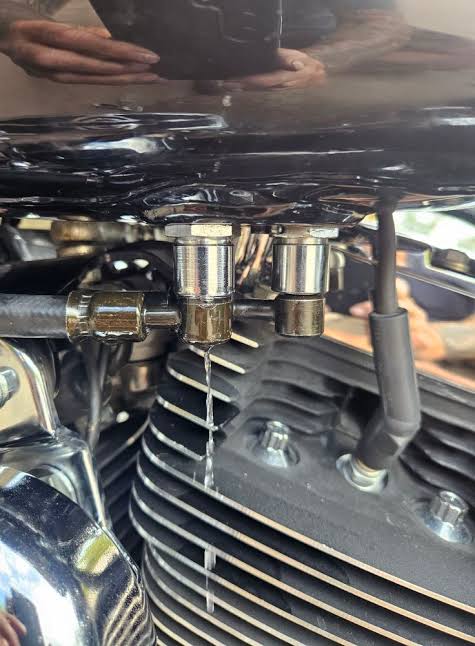
- Underside of the engine: look for leaks, including around the engine and the primary case.
- Oil lines: are the original clamps still on, or have the lines been refitted with non-original clamps?
- Cylinder cooling fins: look for oxidation. It tells you a lot about how and where the bike was kept.
- Fuel tank: are the rubber mounts where the tank is fixed still neat? That shows whether the tank has ever been off.
- Fork legs: check for oxidation and stone chips.
- Disc brakes: are they still original?
- Brake fluid reservoir: check whether it leaks or has leaked. Leaked brake fluid damages the finish around it.
- Tyres: which brand? Good brand-name tyres or the cheapest ones?
- Parts and accessories: has money been spent on the bike, or was the cheap route always taken? Original and good aftermarket parts are expensive. Someone who spends money on their bike usually looks after it as well.
- Dashboard: do all the lights and the rev counter work? The fuel gauge is often broken.
- Test ride: gear changes, braking, vibrations at speed.
- After the test ride: check whether the base gasket is sweating. You only see that once the engine is warm.
- Frame number (VIN): compare it with the title.
- Title: no salvage or rebuilt.
How many miles is too many?
Honestly: never too many. A Road King with 50,000 miles (about 80,000 km) is simply good value, around $3,500 delivered to the port of Rotterdam, and still rides fine. Bikes with that many miles have often been well maintained. So look mainly at the condition and the points on the checklist, not just at the odometer.
What does an older Road King cost?
An older Road King bought in America, including transport to the port of Rotterdam, costs roughly:
| Condition | Mileage | Price to Rotterdam |
|---|---|---|
| Budget runner | approx. 50,000 miles (80,000 km) | approx. $3,500 |
| Nice Road King | approx. 40,000 miles (64,000 km) | approx. $4,500 |
| Clean Road King | approx. 30,000 miles (48,000 km) | approx. $5,500 |
| Very clean Road King | approx. 15,000 miles (24,000 km) | approx. $6,000 |
These are guide prices. They often vary from month to month, depending on what is available in America. Import costs and registration on arrival depend on your country; read cost of importing a Harley and registering a US Harley in Europe, or ask me for an all-in calculation.
Road Kings I have picked up
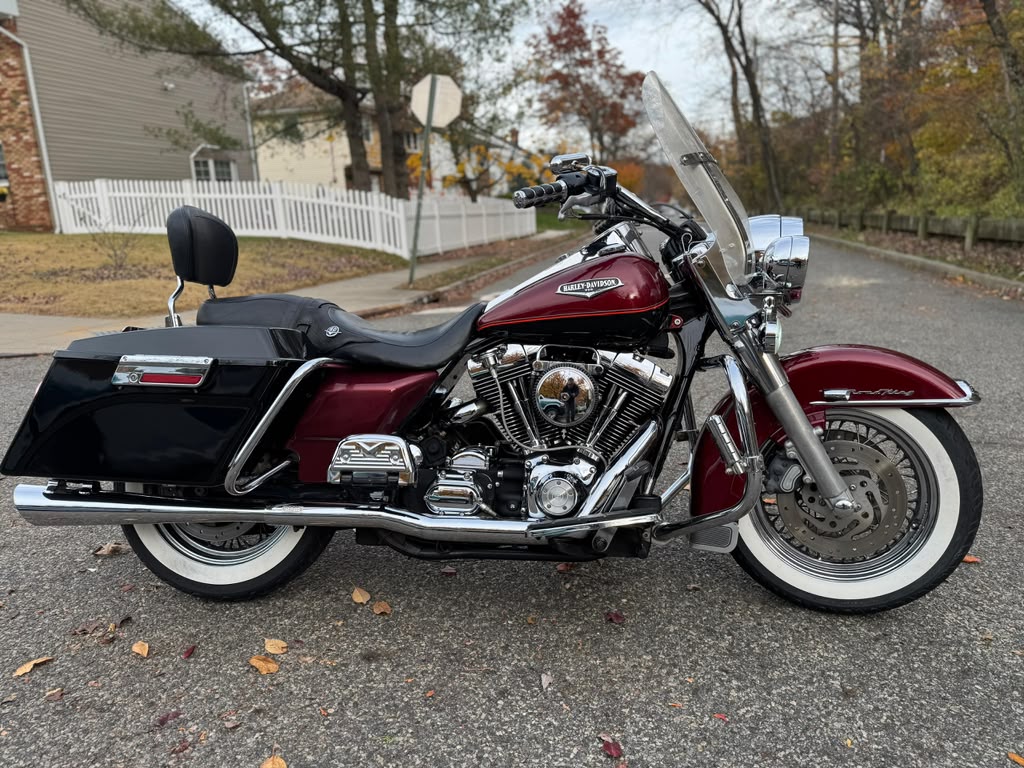
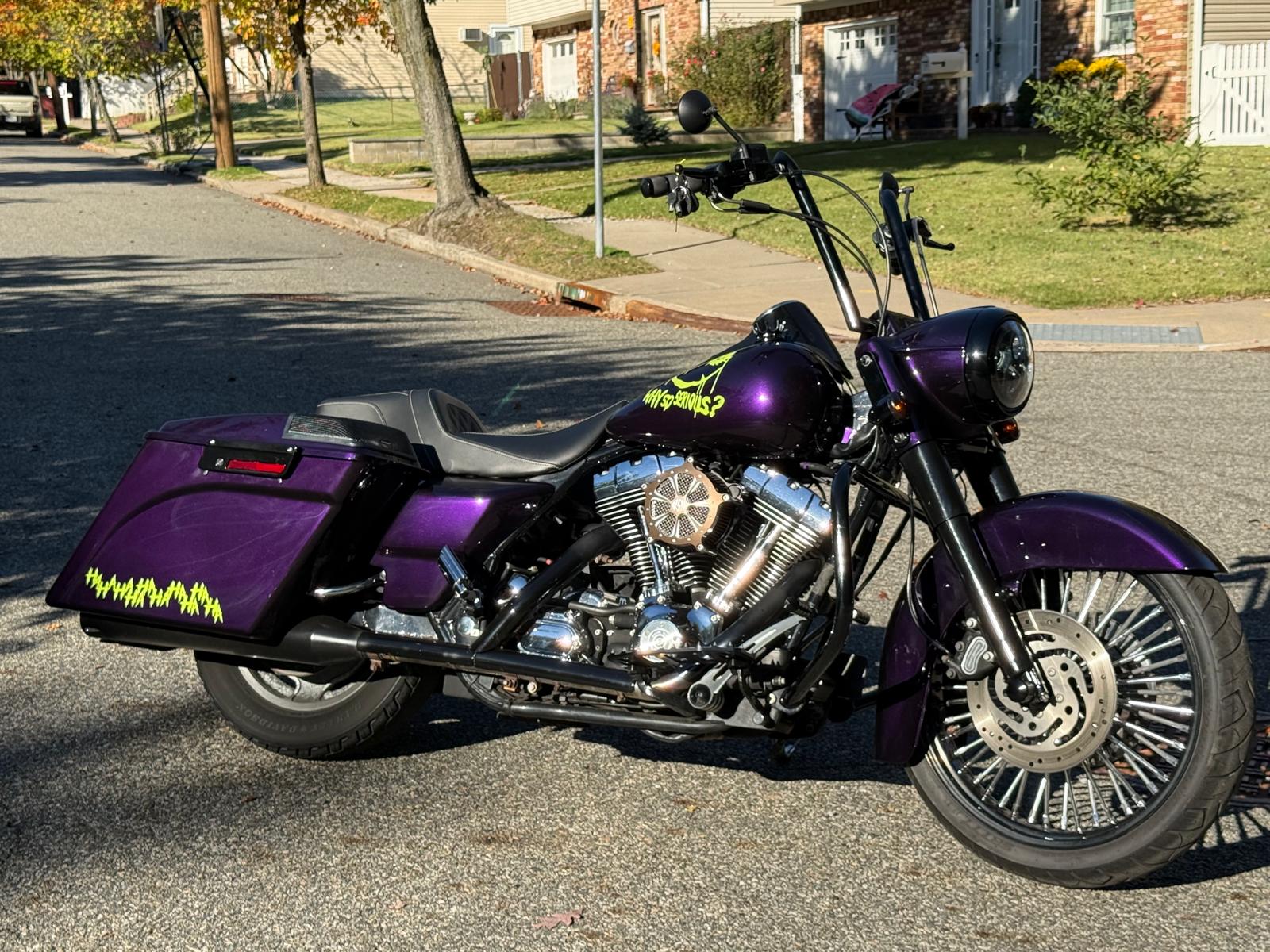
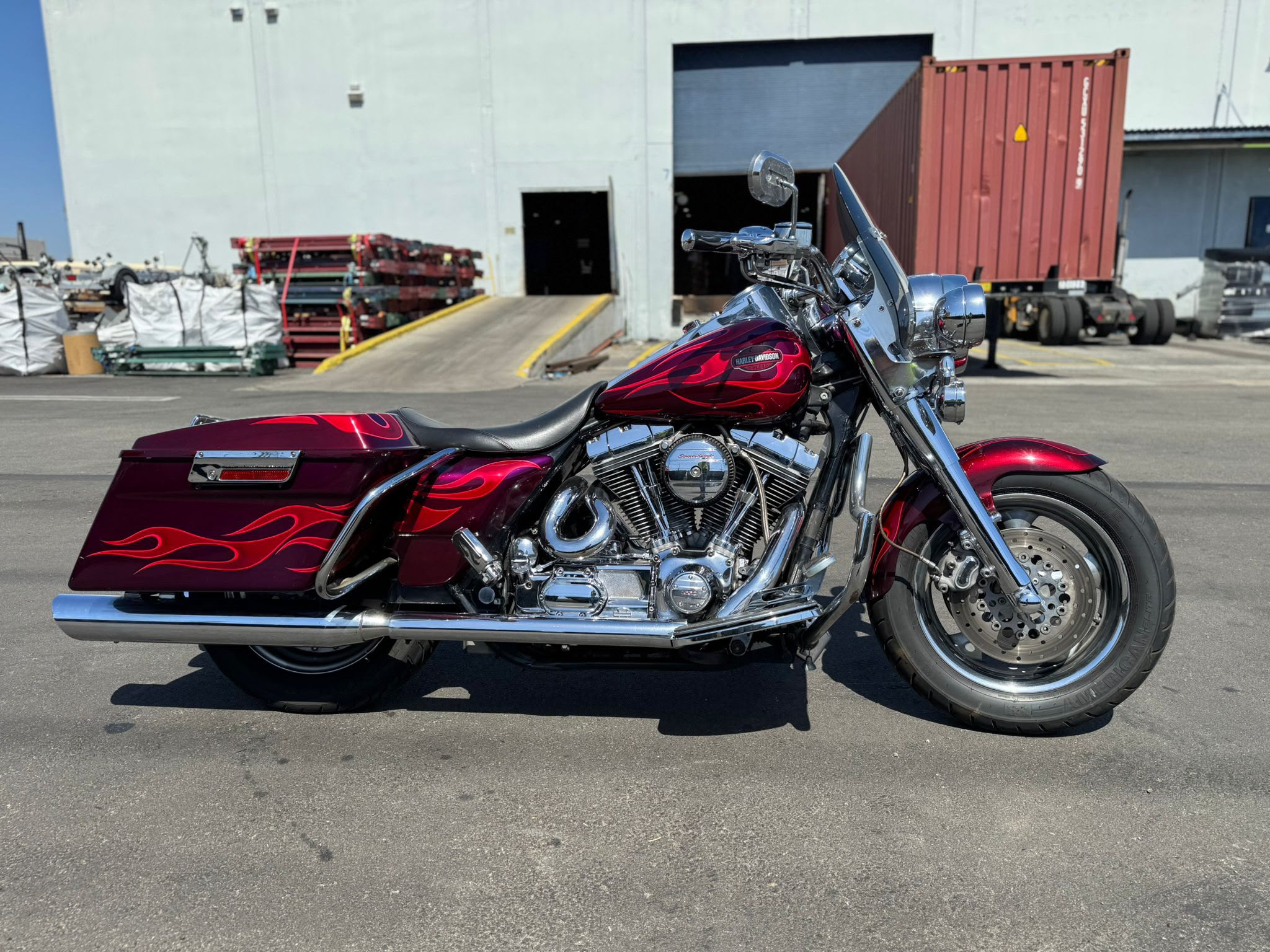
Want me to find a Road King in America for you?
Looking for a Road King from a particular year or in a particular colour? I search, inspect and ship it to Rotterdam. Also see the Road Kings for sale or read how buying a Harley in America works.
💬 Message me on WhatsApp