In this article
Found with a Toyota enthusiast
I bought this 1984 Toyota Land Cruiser FJ60 near Palm Springs, California. The seller is a real Toyota enthusiast: he had four or five Toyotas, and he’d had this Land Cruiser for ten years.
In those ten years he restored it himself. The interior is completely new and the engine has been rebuilt. You can tell he worked on it with care: this isn’t a car that stood for years, but a Land Cruiser ready to drive.
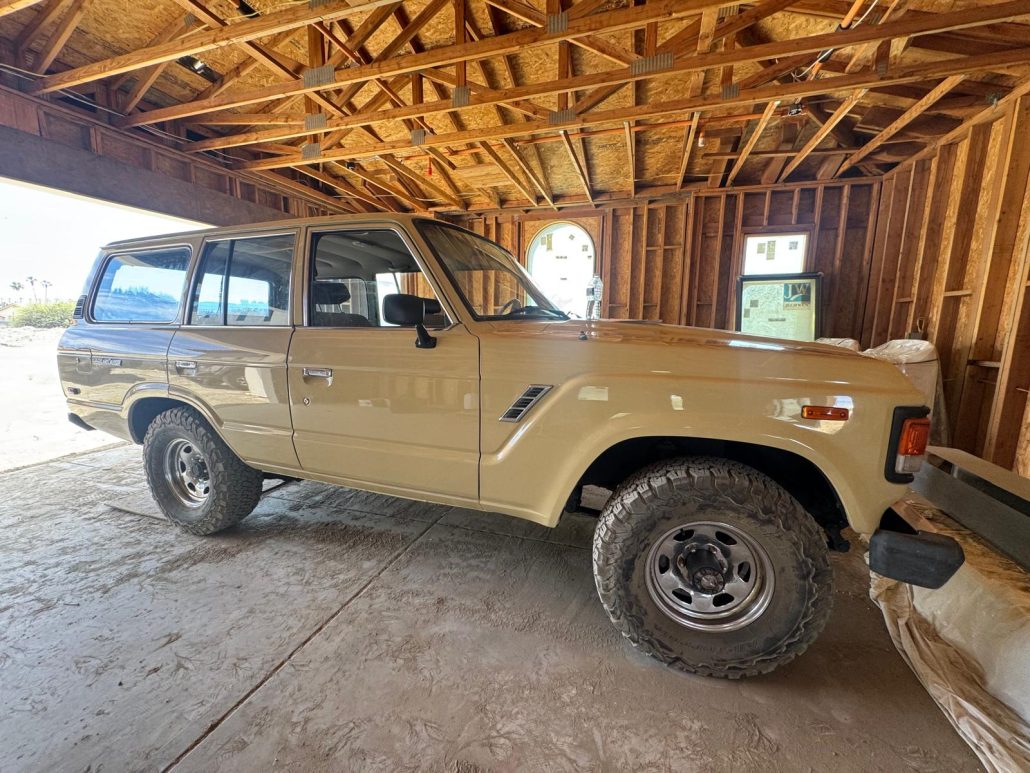
It stood in a garage in Indio, in the desert near Palm Springs. A dry climate, and that’s good news for a car more than forty years old: little chance of rust. On the spot I first had a good look at it: outside, under the bonnet, the interior, and of course a test drive.
| Model | Toyota Land Cruiser FJ60 |
|---|---|
| Year | 1984 |
| Colour | Beige |
| Engine | 4.2 litre petrol straight six (2F), rebuilt |
| Transmission | Manual four-speed |
| Drive | Four-wheel drive with transfer case |
| Mileage | 120,000 miles (approx. 193,000 km) |
| Interior | New |
| Bought near | Palm Springs, California |
| Status | On its way to the Netherlands, for sale there |
What it looks like
In the video you see the Land Cruiser on the trailer, on its way to the port.
The Land Cruiser FJ60: from workhorse to family car
The Land Cruiser has been Toyota’s off-road icon since the fifties. For a long time it was mainly a workhorse: strong, simple and not exactly comfortable. With the 60 series, which arrived in 1980, that changed. Toyota made it a proper station wagon, with room for the whole family and luggage.
The FJ60 is the version with a petrol engine. The F stands for the engine, the J for Jeep-like off-roader. It got more comfort: a padded dashboard, trimmed door panels and options such as power steering and air conditioning. With that the FJ60 laid the foundation for the luxury Land Cruisers we know today.
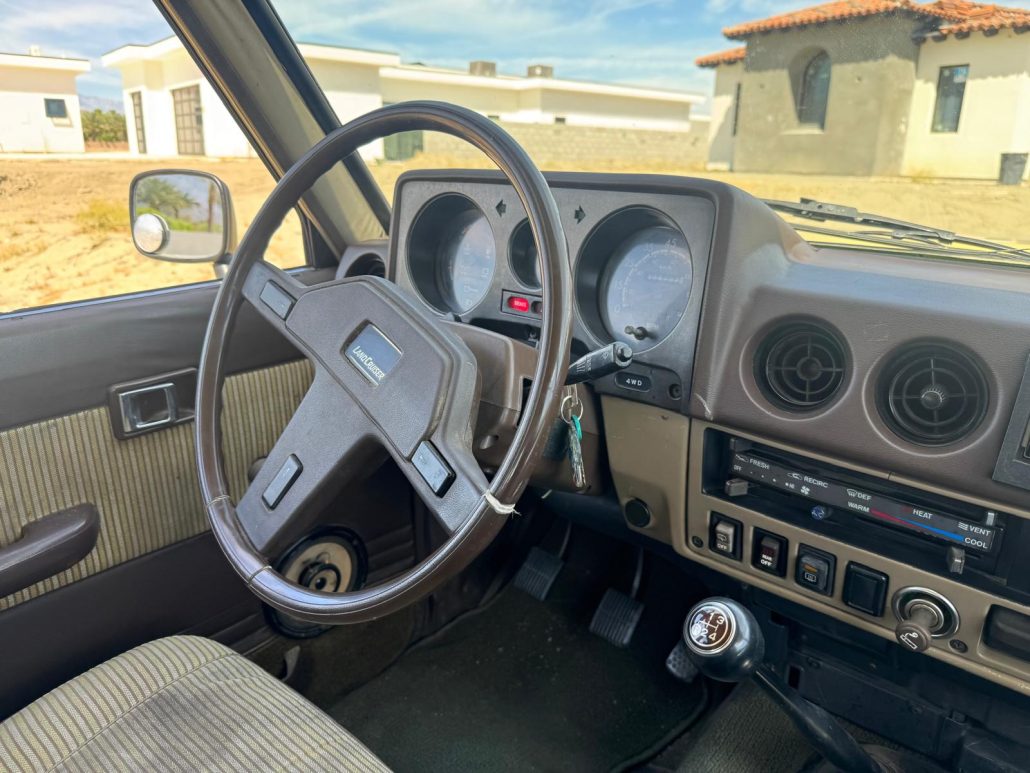
Under the bonnet is the 2F: a 4.2 litre straight six with a carburettor. Not a sprinter, but an engine known above all for its low-rev pulling power and its reliability. With the manual four-speed and the transfer case you can go anywhere, from a forest track to the beach.
In 1984, the year of this FJ60, the last FJ40 also rolled off the line: the famous short, boxy Land Cruiser. In 1988 the FJ60 was succeeded by the FJ62, with square headlights, a fuel-injected engine and an automatic for the first time. Fans look specifically for the FJ60 with its round headlights and simple technology.
Why the FJ60 is so sought after
The FJ60 has become very popular in recent years, in America and in Europe. It combines the rugged, boxy look of a classic off-roader with the space of a station wagon. It’s easy to maintain, parts are easy to get and with good maintenance it lasts a very long time.
An FJ60 from California also has a big advantage: the dry climate. Where Land Cruisers from wet regions often suffer from rust in the floor, the wheel arches and the tailgate, cars from the desert near Palm Springs are usually in much better shape there.
On its way to Europe, and for sale there
This FJ60 is now on its way to the Netherlands, where it will be for sale. A car from 1984 is well over 30 years old. In original condition the EU import duty is usually 0% and a reduced VAT rate applies; customs decides per car. In many European countries a car this age also gets lower road tax or a classic plate. Read more in importing a classic from the USA.
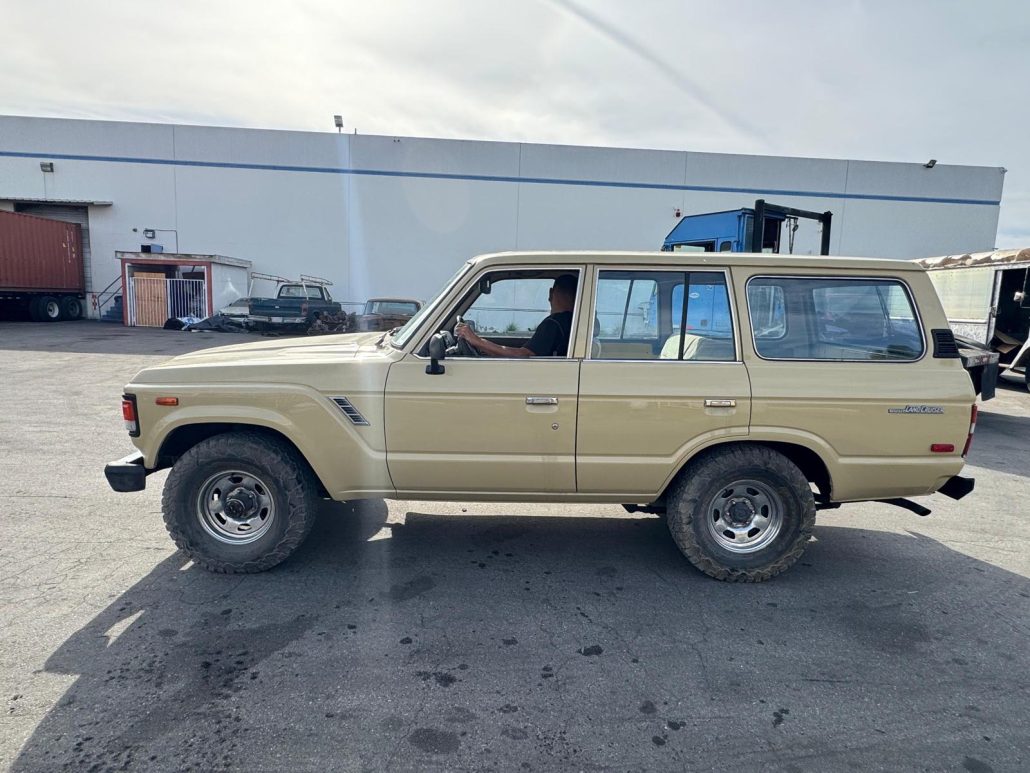
Earlier I also bought a 1982 BMW 633 CSi in California, and we picked up a 1965 Chevrolet C10 in Maryland.
This Toyota Land Cruiser FJ60 will be for sale in the Netherlands. Interested? Send me a message on WhatsApp and you’ll be the first to hear more about the price and when it arrives.